Everything you need to know about Strain Relief Cord Grips
What Is MIL-DTL-22992 Strain Relief?
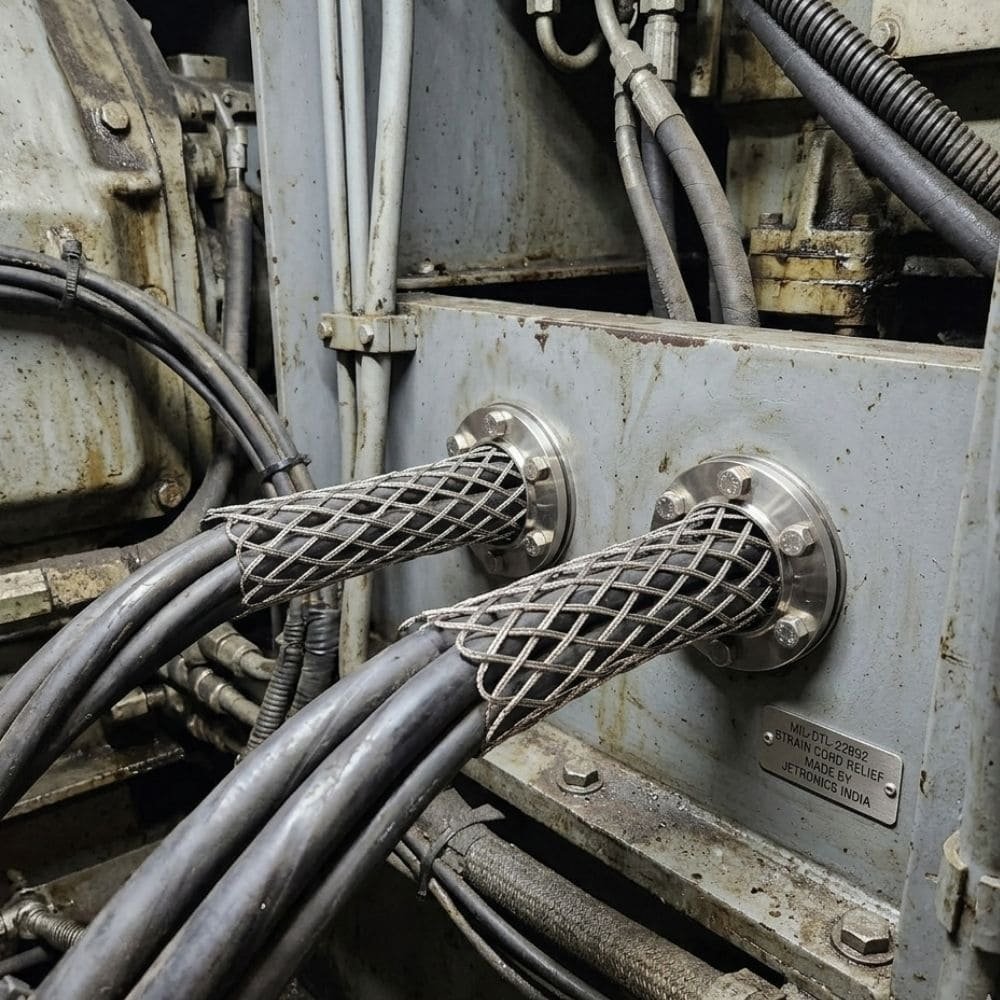
A MIL-DTL-22992 strain relief, often called a cord grip or cable grip, is a mechanical accessory that attaches to the rear of a connector to absorb tensile, torsional, and bending forces on the cable. The purpose of the strain cord relief is simple but critical: to prevent forces from reaching the contact terminations inside the connector. In simple words,it uses a woven stainless steel mesh construction that grips the cable jacket under tension.
Without a strain relief, repeated cable movement from vibration, towing, or routine handling causes contact fatigue, loose terminations, and ultimately connector failure. In defence, ground support, and industrial power applications where these connectors operate at very high current, failure can mean equipment downtime, mission failure or even personnel safety hazards.
Where Is It Used?
MIL-DTL-22992 strain relief cord grips are specified wherever heavy-duty MIL-22992 connectors are used. As a purchase manager, you will typically encounter requisitions for this product from:
- Defence and Military – Ground power units (GPU), armoured vehicle power systems, field generators, mobile command centres, aircraft ground support equipment (GSE).
- Naval and Maritime – Shore power connections, shipboard power distribution panels, submarine support equipment, port power supply systems.
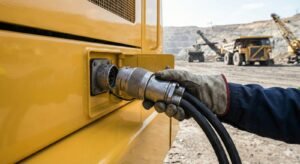
- Heavy Industrial – Mining equipment, oil & gas field power distribution, heavy construction equipment, industrial automation panels with high-current requirements.
- Aerospace / Ground Support – Aircraft maintenance hangars, airport ground power equipment, aerospace test benches requiring MIL-STD-454 compliance.
What to Check Before Raising a Purchase Order
This is the section that purchase managers have to bookmark. Before approving any MIL-DTL-22992 strain relief order, verify the following details:
- Shell size matches your connector — Size 28, 32, 44, or 52
- Cable AWG size falls within the grip’s rated range
- Supplier holds or can supply QPL-compliant product with CoC
- Material is Stainless Steel 304 wire mesh (not galvanised or carbon steel alternatives)
- Weave type is confirmed
- Sealing gland is ordered alongside the cord grip for IP67 applications
- Lead time
- Supplier can provide
- Packaging meets defence storage requirements
Frequently Asked Questions (FAQs) about MIL-DTL-22992 Series Connectors
What is the difference between a cord grip and a backshell?
A cord grip (MS90561) uses a woven stainless-steel mesh that mechanically grips the cable jacket under tension — the pull force causes the mesh to constrict around the cable, transferring the load to the connector shell. A backshell is a threaded aluminium housing that clamps or retains the cable via a clamp or gland nut — used primarily on QWLD-type connectors in this family.
What is the maximum cable pull force that can be withstood?
The woven mesh grip is designed to withstand the full rated cable tension per MIL-DTL-22992 test procedures. The self-locking woven design means grip force increases proportionally with applied cable tension, making it virtually pull-proof within rated cable size limits.
Can the same cord grip be reused after removal?
Technically possible if the mesh shows no deformation or damage but not recommended for critical defence or safety applications. The woven mesh can set to the cable jacket profile over time. For any application where connector reliability is critical, use a new cord grip on each reassembly.