
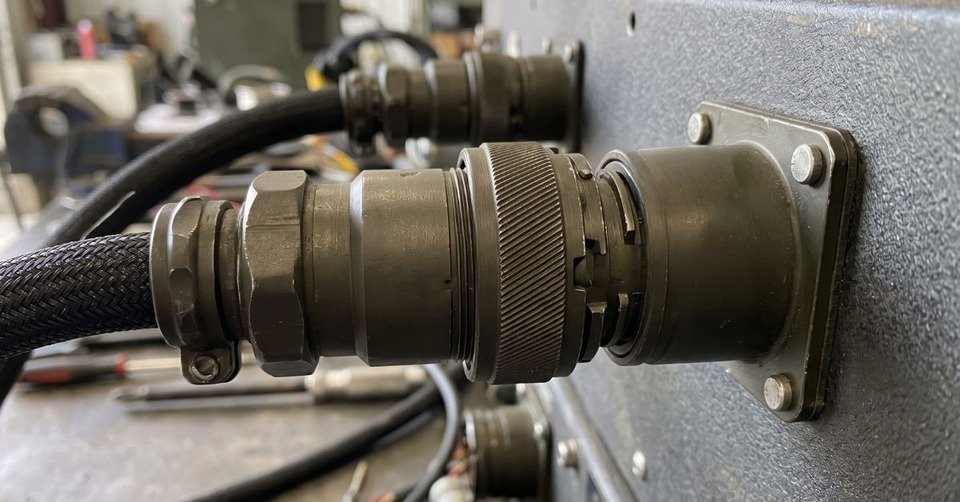
Mil-grade circular connectors like MIL-DTL-5015 or MIL-DTL-26482 are normally built for environments where failure isn’t an option: aircraft, ground vehicles, shipboard systems, and other defence-grade applications. These connectors are engineered with threaded or bayonet coupling, precision alignment keys, and environmental sealing that make them far more robust than commercial connectors — but that robustness also means there’s a specific, correct way to confirm they’re fully mated. A connector that “feels” tight but isn’t fully engaged can still let vibration, moisture, or thermal cycling degrade the contacts over time, and in mission-critical systems that kind of intermittent failure is exactly what you can’t afford.
Here’s how to properly verify a mil-grade aluminium connector is seated and locked.
1. Confirm Full Engagement of the Coupling Mechanism:
Most mil-spec circular connectors use one of two coupling methods, and each has its own way of confirming full mate:
Threaded coupling connectors: Thread the coupling ring by hand until it stops turning under firm resistance. It should not be finger-tight only — proper mating requires the ring to bottom out against the shell shoulder.
Bayonet coupling connectors: Align the guide pin with the keyway slot, push in, and rotate the coupling ring until it stops. You should feel the ring seat firmly against a hard stop, often with an audible click sound as the locking mechanism engages.
2. Torque It to Spec:
Unlike commercial connectors, mil-spec connectors often have a specified mating torque (commonly found in the connector’s datasheet or the spec sheet). Hand-tight is a good starting point, but for connectors in high-vibration environments, a calibrated torque wrench designed for connector coupling rings should be used to hit the exact spec. Under-torquing leaves the connector vulnerable to vibration-induced backing-off; over-torquing can damage the aluminium threads or the seal.
3. Check for Full Insertion — No Visible Gap
With the coupling ring threaded or rotated home, inspect the mating flange visually. There should be zero gap between the plug and receptacle shells. Any visible gap usually means the threads have cross-threaded, or the connector was not pushed straight in before coupling.
4. Check Alignment Keys and Keyways
Mil-spec circular connector use keying inserts or alignment pins to ensure the plug can only mate with the receptacle in one correct orientation. Before assuming the connector is seated, confirm:
- The keyway and key are fully aligned, not just close
- The connector went in straight, without being forced at an angle
Forcing a misaligned connector can bend contact pins inside the aluminium shell, which may not be visible from outside once mated.
5. Inspect the Environmental Seal
Mil-grade connectors typically include a peripheral O-ring, or square gaskets or strain relief grips to block moisture, dust, and fluids. A properly mated connector should show:
- No visible compression gap around the seal
- No pinched, twisted, or protruding rubber at the mating interface
If the seal looks pinched or is visibly poking out at any point around the circumference, back the connector off, inspect the seal for damage or debris. If the connector is being used in such environments, use the appropriate accessories for added protection.
With mil-grade aluminium connectors, “properly mated” means both a correctly torqued, fully engaged mechanical coupling and a verified electrical connection. Because these connectors are built to survive extreme vibration, temperature cycling, and repeated field mating, the failure modes tend to be subtle: a cross-threaded coupling, an unengaged anti-decoupling ring, or a seal that’s slightly pinched can all look fine from a glance but cause problems months later.